
Saskatchewan farmland value depends on location, soil quality, productive acres, crop potential, access, improvements, and local buyer demand. There is no single price that applies to every acre across the province. Two farms of the same size can have very different values because one may have better soil, easier access, or more productive land.
The best way to find your farmland’s value is to compare recent local sales and adjust for the features of your property. A farmland specialist can also help you understand what buyers may be willing to pay in the current Saskatchewan market.
How Much Is Farmland Worth in Saskatchewan?
There is no single price per acre for Saskatchewan farmland. The value can change greatly from one region, Rural Municipality, or parcel to another.
A farm’s value is usually based on a mix of:
Recent farmland sales nearby
Number of cultivated acres
Soil quality
Crop productivity
Location
Road access
Drainage
Buildings and improvements
Rental income
Surface lease income
Local buyer demand
This means an average provincial farmland price may not tell you what your own property is worth.
A better approach is to compare your land with similar farms that have sold in the same area. Then, adjust for differences in soil, acres, location, access, and improvements.
If you are trying to understand how agricultural properties are being offered to buyers, you can also review current Saskatchewan farms for sale.
How Do I Calculate the Value of My Farmland?
A simple farmland valuation starts with recent comparable sales. Look for farms in the same area that are similar in size, soil quality, productive acres, and use.
A basic calculation can look like this:
Estimated farmland value = adjusted value per productive acre × productive acres + value of useful improvements or additional income
This is only a starting point. The final market value depends on what qualified buyers are willing to pay for the property.
Step 1: Find Recent Comparable Farmland Sales
Start by looking at farmland that has sold recently in the same general area.
The best comparable properties should have similar:
Location
Soil type
Acreage
Cultivated acres
Land use
Access
Improvements
A sale from a nearby area is usually more useful than a sale from the other side of Saskatchewan.
Farmland markets can be local. A strong farming area with several buyers may have different prices from another region, even if the soil looks similar.
Step 2: Calculate the Productive Acres
Total acres and productive acres are not always the same.
A 160-acre parcel may include:
Cultivated land
Bush
Sloughs
Yard sites
Roads
Wet areas
Pasture
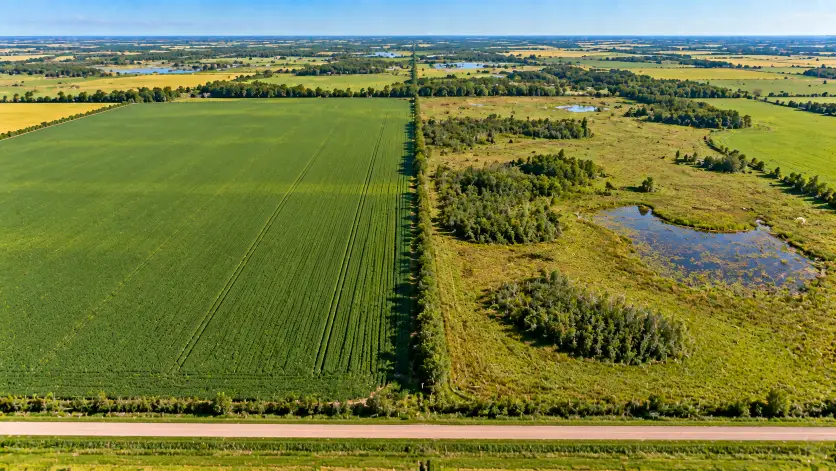
Buyers often pay close attention to how much of the property can actually be farmed.
For example, two quarter sections may both contain about 160 acres, but one may have far more cultivated land. That difference can affect the price buyers are willing to pay.
Step 3: Compare Soil and Productivity
Next, compare your soil and production potential with the properties that have sold.
Consider:
Soil type
Soil class
Drainage
Field condition
Crop history
Yield potential
Natural obstacles
Better agricultural productivity can support a higher land value because the property may generate more income over time.
Step 4: Add the Value of Useful Improvements
Some farmland includes buildings or other improvements.
These may include:
Grain bins
Shops
Barns
Fencing
Irrigation
Water systems
Livestock facilities
Yard sites
Useful improvements can add value, but they do not always add their full replacement cost to the property.
A newer grain storage system may be valuable to one buyer. An old barn that a grain farmer does not need may add very little value.
Step 5: Consider Income From the Property
Farmland may generate income beyond crop production.
Examples include:
Cash rent
Crop-share income
Pasture rent
Surface leases
Oil and gas payments
Other land-use agreements
Reliable income can make a property more attractive to some buyers, especially investors.
If your property has oil wells, pipelines, or other surface agreements, our guide on surface leases and farm value in Saskatchewan explains how this type of income may affect a sale.
What Factors Affect Farmland Prices in Saskatchewan?
Farmland prices are affected by both property features and market conditions. The strongest factors are usually location, soil, productive acres, access, income potential, and buyer demand.
No single factor determines the final value. Buyers look at the whole property before deciding how much they are prepared to offer.
Productive Acres
Productive acres are important because they directly affect how much land can be used for farming.
A property with a high percentage of usable acres may be more attractive than another parcel with a large amount of bush, water, or non-productive land.
Buyers may compare both the total price and the price per cultivated acre.
Crop Production Potential
A farm that can produce reliable crops may be worth more to an active farmer.
Buyers may look at:
Past crop performance
Soil conditions
Moisture
Drainage
Field shape
Ease of farming
Strong production potential can help support a higher purchase price.
Access and Field Shape
Easy access can make farming more efficient.
Buyers may value properties with:
Good road access
Large connected fields
Few obstacles
Easy equipment movement
Convenient access between parcels
Irregular fields, poor roads, or difficult access may make a property less efficient to farm.
Buildings and Infrastructure
Farm buildings can affect value when they are useful and in good condition.
Grain storage, shops, barns, water systems, and fencing may appeal to buyers who need those features.
However, older improvements can also require repairs or maintenance. Their value depends on condition and buyer needs.
Local Buyer Demand
Buyer demand can have a major effect on the final sale price.
If several farmers want land in the same area, competition may increase. A neighbouring producer may also place extra value on a parcel because it fits well with land they already farm.
This is one reason Saskatchewan farmland should be valued at the local level instead of using only a province-wide average.
Does Soil Quality Affect Farmland Value?
Yes. Soil quality can have a major effect on Saskatchewan farmland value because it influences crop productivity and income potential.
Productive, well-drained soil is often more attractive to farm buyers. Poor drainage, salinity, erosion, stones, or other soil problems may reduce the amount a buyer is willing to pay.
What Soil Features Do Buyers Consider?
Buyers may review:
Soil classification
Texture
Drainage
Salinity
Topography
Organic matter
Crop suitability
Past production
However, soil should not be considered alone.
A farm with excellent soil may still have value limits if access is poor or a large part of the parcel cannot be cultivated. At the same time, land with average soil in a highly competitive farming area may receive strong buyer interest.
The best valuation considers soil together with location, productive acres, income, and market demand.
Does Location Affect Farmland Prices?
Yes. Location is one of the most important factors affecting Saskatchewan farmland prices.
Land values can change between regions and even between nearby Rural Municipalities.
Why Does Location Matter?
Location can affect:
Local buyer competition
Transportation costs
Access to grain elevators
Distance to farm operations
Availability of agricultural services
Crop options
Growing conditions
Ease of moving equipment
A farmer may pay more for land close to an existing operation because it is easier and less expensive to manage.
A parcel that requires long-distance travel may be less attractive to the same buyer.
Does Being Near a City Increase Farmland Value?
In some cases, farmland near a city, town, or growing community may attract different types of buyers.
Its value may be influenced by:
Agricultural demand
Acreage demand
Accessibility
Future development interest
Nearby services
However, sellers should not assume that land is worth more simply because it is close to a city. Its permitted use, agricultural quality, access, and actual buyer demand still matter.
Regional listing pages, such as Regina farms for sale and farmland for sale in Saskatoon, can help buyers see how properties differ across Saskatchewan markets.
What Is Fair Market Value for Farmland?
Fair market value is generally the price a willing buyer and willing seller may agree on when both understand the property and neither is being forced to complete the transaction.
For farmland, fair market value should reflect real market evidence rather than an owner’s preferred price.
Important information may include:
Recent comparable sales
Local asking prices
Soil quality
Productive acres
Income potential
Property improvements
Buyer demand
Our detailed guide on determining the fair market value of farmland explains the valuation process in more detail.
Should I Use Price Per Acre to Value My Farm?
Price per acre is useful, but it should not be used by itself.
For example, Farm A and Farm B may both sell for a similar total price per acre. However, Farm A may have almost all cultivated land, while Farm B has a large amount of bush and wet land.
A simple price-per-acre comparison could therefore be misleading.
When comparing properties, consider:
Price per total acre
Price per cultivated acre
Soil quality
Location
Improvements
Income
Access
The goal is to compare similar properties rather than simply choosing the highest or lowest per-acre figure.
Can Rental Income Affect Farmland Value?
Yes. Rental income can help buyers understand the earning potential of farmland.
Investors may pay close attention to:
Annual cash rent
Lease length
Tenant history
Lease terms
Expected return
Active farmers may focus more on crop production and how well the land fits their existing operation.
If land is currently rented, sellers should gather the lease documents before listing the property. Buyers need to understand whether a lease continues after the sale and when possession may be available.
How Can I Increase My Farmland's Value Before Selling?
You may not be able to change your farm’s location or soil, but you can make the property easier for buyers to understand and evaluate.
Before selling, consider:
Gathering soil and crop information
Organizing lease agreements
Confirming cultivated acres
Preparing maps
Collecting tax records
Listing buildings and improvements
Cleaning visible areas
Making access easy to understand
Preparing clear property photos
Good information does not change the land itself, but it can reduce buyer uncertainty.
A well-prepared property is easier to market because buyers can quickly understand what they are considering.
Do I Need a Professional Farmland Valuation?
A professional opinion can be useful when you are planning to sell, divide an estate, transfer land, or make a major financial decision.
A farmland realtor may use market data and comparable sales to help estimate a likely market price. A formal appraisal may be needed for certain legal, financial, estate, or lending purposes.
If your goal is to sell, it is important to understand both the property’s value and how buyers may respond to the asking price.
Darren and Tyler Sander provide support for buying and selling farmland in Saskatchewan, including guidance around pricing, marketing, and the selling process.
Frequently Asked Questions
How Much Is Farmland Worth in Saskatchewan?
Saskatchewan farmland does not have one fixed value per acre. Price depends on the region, soil quality, productive acres, location, access, improvements, income, and local buyer demand.
How Do I Calculate the Value of My Farmland?
Start with recent sales of similar local farmland. Compare their price per acre with your property, then adjust for cultivated acres, soil, location, buildings, access, rental income, and other important features.
What Factors Affect Farmland Prices?
The main factors include location, soil quality, productive acres, crop potential, access, improvements, rental income, surface lease income, and buyer demand.
Does Soil Quality Affect Farmland Value?
Yes. Better soil can support stronger crop production and higher income potential, which can make the property more valuable to buyers.
Does Location Affect Farmland Prices?
Yes. Farmland values vary by area because buyer competition, transportation, growing conditions, nearby farms, and access to agricultural services can differ.
Is Price Per Acre Enough to Value Farmland?
No. Price per acre is useful, but you should also compare productive acres, soil, buildings, access, income, and location. Two farms with the same total acreage may have very different market values.
Does a Farm Lease Affect Land Value?
Yes. A lease may affect income, buyer plans, possession, and the timing of a sale. Sellers should have current lease terms available so buyers know what obligations come with the property.
Final Thoughts
The value of Saskatchewan farmland depends on much more than the number of acres. Soil quality, cultivated acres, location, access, improvements, income, and local buyer demand all help determine what a property may be worth.
The best starting point is to compare recent sales of similar farmland in the same area. From there, adjust for the unique strengths and limits of your property. This gives you a more useful estimate than relying only on a province-wide average.
If you are thinking about selling, proper valuation is also an important part of your pricing strategy. You want a price that reflects the property while still attracting qualified buyers.
For help understanding your land and the Saskatchewan farmland market, visit Darren Sander Realty. When you are ready to discuss the value of your property or a possible sale, you can also contact Darren Sander Realty for guidance.
