
If you own farmland in Saskatchewan, you know that the value of your land is based on more than just the quality of your soil. While grain prices and soil classes are important, there is another "hidden" factor that can change your bank balance significantly: Surface Lease Revenue.
Whether you have oil wells, pipelines, or power lines on your property, these industrial footprints come with annual payments. But when it's time to sell, how does this income affect your asking price? Does it make the land worth more because of the cash flow, or less because it's harder to farm around pumpjacks?
In this guide, we will break down exactly how surface lease revenue impacts Saskatchewan farmland values.
Does Surface Lease Income Increase Farmland Value?
Yes. In most cases, surface lease income increases the sale price of farmland. Because these leases provide a steady, guaranteed annual cash flow that is separate from crop yields, buyers often treat the lease as an investment. Typically, the value of the lease is calculated by multiplying the annual payment by a "multiplier" (often 6 to 10 times the annual income) and adding that amount to the land's agricultural value.
What Exactly is Surface Lease Revenue?
In Saskatchewan, the government or private companies often own the "mineral rights" (what is under the ground), while you own the "surface rights" (the top layer where you farm).
When an energy company wants to drill for oil or run a pipeline, they must compensate the landowner for using the surface. This compensation is called a Surface Lease. These payments are meant to cover three main things:
The loss of use of the land: You cannot plant crops where the well or battery sits.
The nuisance and inconvenience: You have to drive around equipment.
Potential damage: This covers the risk to the soil or surrounding area.
If you are determining the fair market value of your farmland, you must look at these leases agreements as part of the total financial package.
The Positive Impact: Why Buyers Love Lease Income
From a financial perspective, surface lease revenue is very attractive. Here is why it often pushes the sale price higher:
1. Diversified Income
Farming is a risky business. Weather, pests, and global markets can all hurt your profits. Surface lease payments are "fixed." Rain or shine, that check arrives every year. This stability is a huge plus for someone buying farmland as an investor because it provides a "floor" for their income.
2. Increased Borrowing Power
Lenders and banks look at total income when approving a mortgage. If a quarter section brings in an extra $5,000 a year in lease revenue, it is easier for a buyer to justify the loan. This can increase the number of people who can afford to bid on your land, which drives up the price.
3. The Multiplier Effect
When selling farmland in Saskatchewan, realtors and appraisers don't just look at one year of lease income. They use a "multiplier."
For example, if a property has $3,000 in annual lease revenue and the market uses an 8x multiplier, that property might sell for $24,000 more than a similar piece of land with no wells.
This is a common practice in Saskatchewan farmland valuation.
The Negative Impact: The "Nuisance" Factor
It’s not all good news. There are reasons why some buyers—specifically active farmers—might be wary of land with too much industrial activity.
1. Farming Efficiency
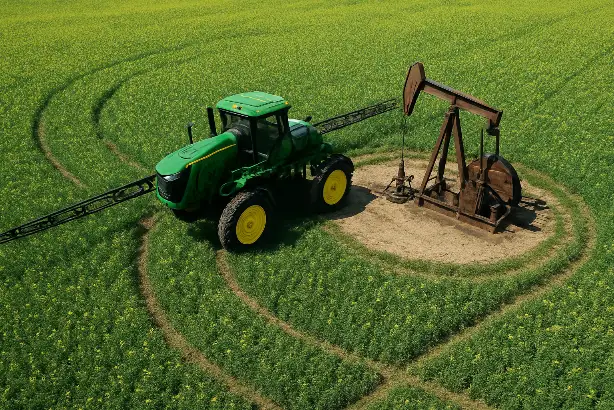
Modern farm equipment is massive. Navigating a 120-foot sprayer or a wide air drill around a pumpjack or a power pole is difficult. Over time, the extra fuel and time spent turning the equipment adds up. When looking at what buyers look for in farmland, efficiency is often at the top of the list.
2. Weed and Pest Control
The areas around oil wells can sometimes become breeding grounds for weeds like Kochia or Canada Thistle. If the energy company doesn't maintain the lease site perfectly, the farmer has to deal with the spread of weeds into their clean crop.
3. Soil Compaction
Heavy trucks coming in and out to service oil wells can compact the soil on the access roads. This can reduce yields in the areas immediately surrounding the lease site for years to come.
How to Value the Lease When Selling
If you are selling inherited farmland, you might find old lease documents in the files. To get the best price, you need to do a bit of math.
Check the Payment History: Are the payments up to date? Some smaller oil companies have struggled recently. A "zombie well" (a well that doesn't pay but hasn't been cleaned up) can actually lower your land value because it's a liability.
Verify the Terms: When is the next rent review? In Saskatchewan, surface lease rates are usually reviewed every few years. If a review is coming up soon, there might be an opportunity to increase the income, which adds value for the buyer.
Gather the Documents: You will need the original lease agreement and the most recent payment stubs. This is a key part of the documents you need to sell farmland.
Investor vs. Operator: Who Will Pay More?
Who ends up buying your land will determine how much the lease revenue matters.
Investors: They usually value the lease income highly. They want a "cap rate" (return on investment). To them, the lease is like having a second tenant on the land.
Active Operators: They value the land's productivity first. If the wells are placed in a way that makes farming miserable, they might not pay a huge premium for the lease. They are focused on farming for tomorrow and long-term yields.
Knowing what affects farmland value in Saskatchewan helps you target the right buyer. If you have high lease revenue, your marketing should focus on the financial ROI to attract investors.
The Importance of Title Searches
When you list your land, the buyer’s lawyer will look at the land title. You will see things called "caveats" or "interests" registered by the oil companies. This is normal. It protects the company's right to be there.
However, you should ensure that these interests match the current companies operating on your land. If a company has gone bankrupt, those interests might need to be cleared before the sale.
If you are making your first farm purchase in Saskatchewan, never assume a pumpjack means "free money." Always verify that a valid lease is in place and that the payments are transferable to the new owner at the land titles office.
Conclusion
Surface lease revenue is a powerful tool for increasing your farm’s sale price, but it requires a careful balance. It adds guaranteed cash flow and investment value, but it can also create headaches for the person driving the tractor.
If you are planning to sell land with oil and gas activity, it is vital to work with a realtor who understands the "multiplier" math and can explain the benefits to potential buyers.
Understanding the current trends in farmland values is the first step toward a successful sale.
Ready to find out what your Saskatchewan farmland is worth?
Whether you have ten oil wells or just a single pipeline, we can help you calculate the true market value. Contact Darren and Tyler Sander today for a professional evaluation of your land and its lease potential. We specialize in helping families navigate farm succession and land sales across the province.
