
Analyzing the projected farmland rental rates for 2026 is essential for maintaining profitability this year. Based on the latest Ministry data, base ownership costs now range from $70.10 to $80.66 per acre across different soil zones. Landowners must balance these elevated base costs against tenant affordability. Historical market data and local expertise provide the necessary framework to establish a fair middle ground. Let’s make sure your lease is a winner for both sides.
Browse High-Yield Saskatchewan Land Inventory
Saskatchewan Land Investment Costs 2026
Defining the landlord's break-even ownership cost is the first step in understanding current market dynamics. According to the Ministry’s Land Investment data, these figures serve as the foundational floor for negotiating farmland rental rates in 2026.
This cost accounts for a specific land investment formula: 85% of owned land equity is applied to a 1.5% opportunity cost, while the remaining 15% is applied to a 4.57% mortgage rate over a 25-year amortization.
Saskatchewan Farmland Rental Rates by Soil Zone
Soil productivity and technical valuations are the primary determinants of Saskatchewan farmland rental rates by soil zone. The 2026 guide reveals significant variances in the underlying asset values per cultivated acre:
Brown Soil Zone: $3,136 per cultivated acre.
Dark Brown Soil Zone: $3,606 per cultivated acre.
Black Soil Zone: $3,371 per cultivated acre.
These valuations are inextricably linked to target yields. For 2026, the 80th percentile target yield for Hard Red Spring Wheat is 44.0 bu/ac in the Brown zone and 66.8 bu/ac in the Black zone. For Canola, targets range from 35.3 to 50.0 bu/ac.
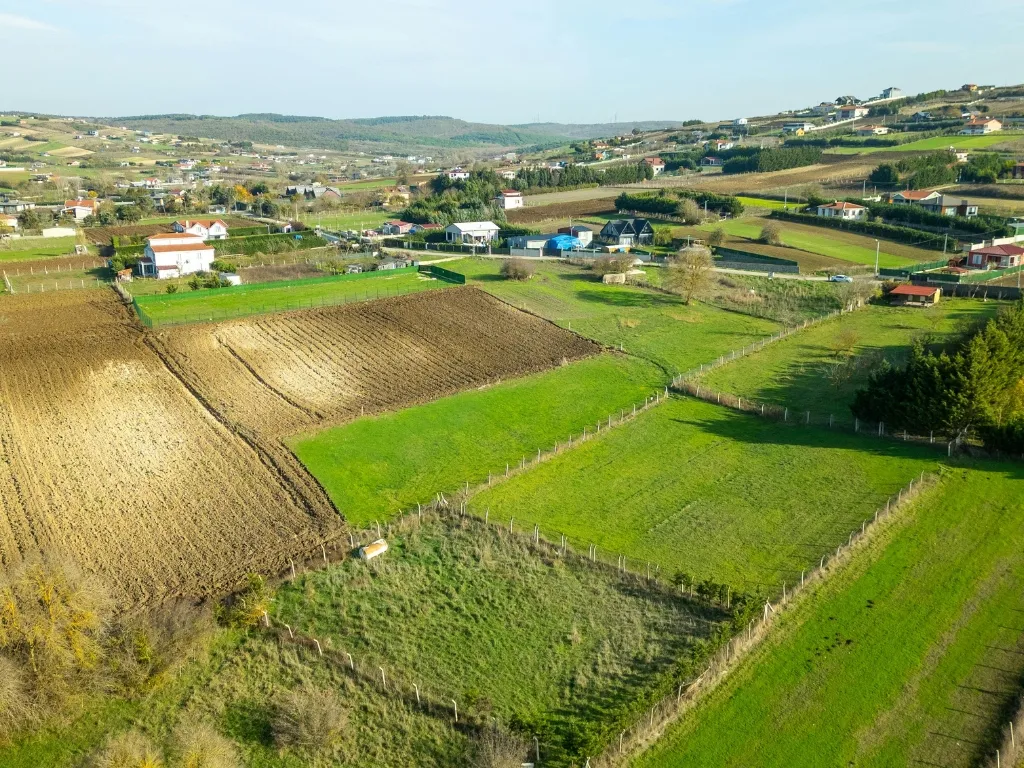
Investors frequently benchmark these figures against current agricultural listings to calculate accurate capitalization rates.
Access Exclusive Professional Farm Listings
Cash Rent vs Crop Share Saskatchewan 2026
When deciding between cash rent vs crop share Saskatchewan 2026, producers must confront a sobering "Return Over Total Expenses" analysis. A critical expert insight for 2026 is the "Yield Sensitivity" risk.
While many crops show positive returns at the 80th percentile target yield, falling to a "Provincial Average Yield" results in catastrophic losses.
The Landlord vs Tenant Risk in Farm Leases
Fixed Rent SK Farmland: Under a fixed rent SK farmland agreement, the tenant bears 100% of the yield and price risk.
Barley Sensitivity: In the Brown soil zone, Feed Barley shows a negative return of $108.82 over total expenses at the target yield. This loss deepens significantly to $215.28 when reaching only the average yield.
Malt Barley Risk: In the Dark Brown zone, Malt Barley shows a negative return of -$148.30 over total expenses, even at the 80th percentile yield.
Variable Headwinds: High variable input costs and a 5.68% interest rate on variable expenses create significant financial headwinds for operators.
Detailed comparisons of leasing vs sharing models suggest that sharing the risk is becoming more common as production costs rise.
Read Latest Agricultural Market Insights
Technical & Regulatory Considerations
Compliance with the Saskatchewan Farm Security Act lease restrictions remains a technical priority for 2026. Lease agreements should explicitly account for "Business Overhead", including legal, accounting, and insurance, which the Ministry has indexed to the 2021 Census of Agriculture.
Proper documentation is especially vital during family land transitions to ensure all parties are protected.

GST and Passive Income Rules
Navigating federal tax regulations is vital for maintaining the profitability and compliance of Saskatchewan agricultural leases.
Passive Income Classification: Under current CRA rules, income from a fixed rent SK farmland structure is typically classified as passive, which may negatively affect a landowner's tax position.
Active Participation: Engaging in a crop-share agreement can shift income classification, as the CRA often views active involvement differently than static rent collection.
GST Compliance: Landowners must strictly adhere to GST rules for farmland rent in Saskatchewan, including mandatory registration and collection for commercial leasing activities.
Regulatory Alignment: Technical assumptions should be verified with regional specialists to ensure all lease structures meet current federal and provincial legal requirements.
2026 Market Outlook: The Potential Correction
Technical indicators suggest the Saskatchewan land market is currently overextended and testing historical resistance levels.
Overbought Market Signals: The Relative Strength Index (RSI) currently sits at 96.22, significantly higher than the 70-level threshold that identifies a market as "overbought."
Historical Resistance: Current inflation-adjusted prices of $2,647 per acre are testing a major trendline that connects the market highs of 1922 and 1981.
Retracement Risk: Technical data suggests a 60% Fibonacci retracement is possible, which would imply a price correction down to $1,270 per acre.
Cautious Expansion: Market signals indicate a high probability of a price correction, suggesting that farmland rental rates for 2026 negotiations should be approached with extreme caution.

Conclusion
When negotiating farmland rental rates in 2026, producers must look beyond the base land investment costs of $70.10 to $80.66. To determine specific debt-servicing capacity and a fair rental baseline, utilizing professional land management tools is recommended to assess costs based on the 4.57% mortgage rate and 25-year amortization used in the 2026 planning guide.
For those requiring a land management consultation, expert advisory services are available to navigate these complex economic indicators.
