
Grain and oilseed farming around Melfort, Saskatchewan, depends on good land and practical facilities. A field can have strong soil, yet a weak approach or damaged storage system may make daily operations slower and more costly.
Grain bins, farm shops, machinery storage and field access can affect how efficiently a farm works. Their condition matters as much as their size. A useful review asks what each building does, what it may cost to maintain and whether it fits the operation.
Why infrastructure is part of the farming picture
Melfort is a service centre for an agricultural area in northeastern Saskatchewan. Local operations vary, but grain, oilseed and mixed farming all rely on equipment and transport systems. During seeding and harvest, a small delay can affect the day's work.
Start by listing the facilities on a property. Note their size, age, location, condition and current use. Then consider how they work together. A bin far from the loading area may be less convenient than one that fits the truck and yard layout.
At Darren Sander Realty, we help people explore farm properties throughout Saskatchewan, including the Melfort region.
Grain bins: capacity is only one question
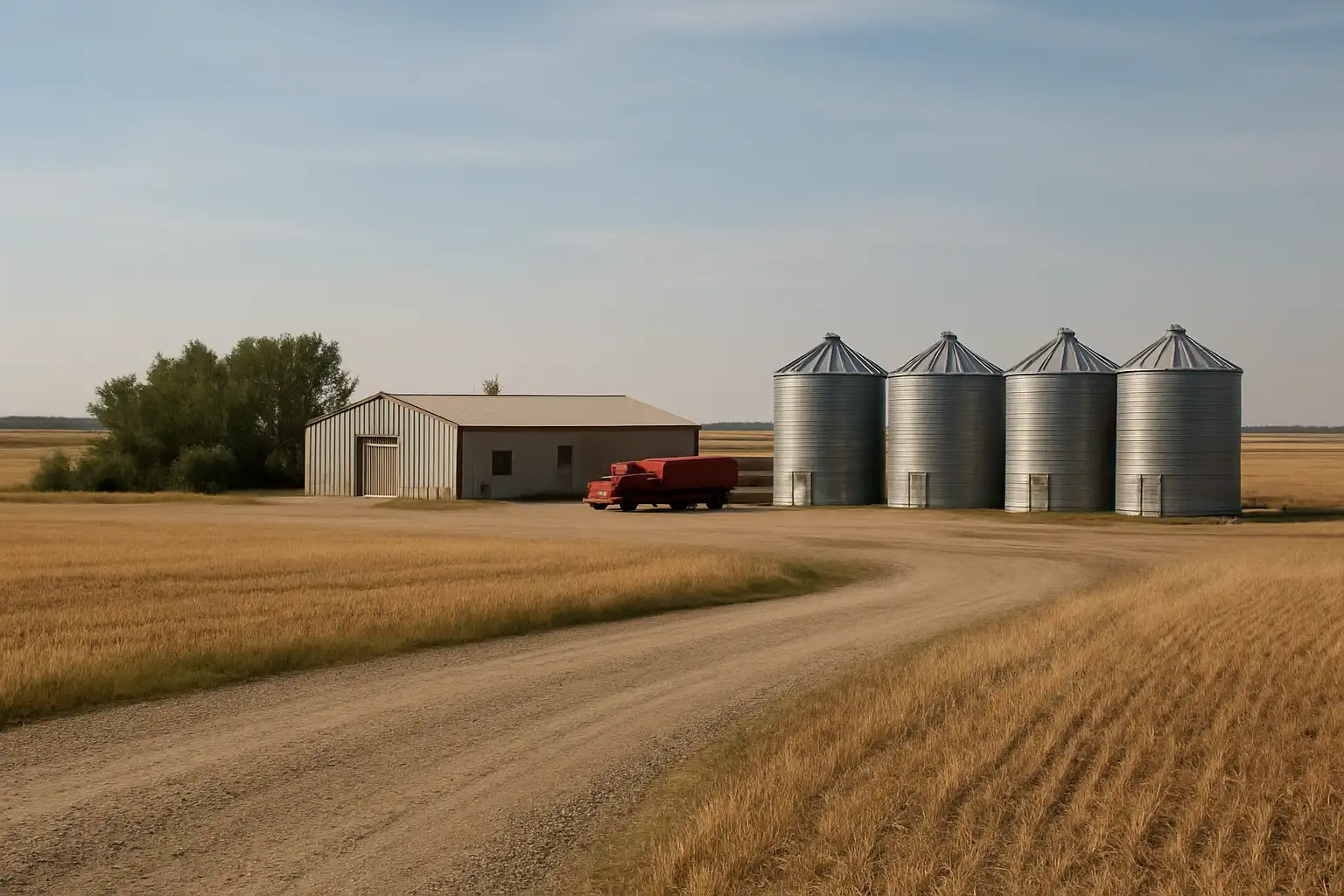
A grain bin provides space to store a harvested crop before delivery or sale. Storage may give an operator more control over handling and transport. But a large bin is not always a useful one.
Check the roof, walls and foundation for damage. Look for rust, leaks, bent panels and movement around the base. Review loading and unloading equipment, power supply, ladders and safety systems. Ask whether repairs have been made and what work may still be needed.
A bin's rated capacity also differs from the amount that can be used safely for a given crop and setup. The crop, bin design and equipment determine safe operating limits.
Aeration and grain condition
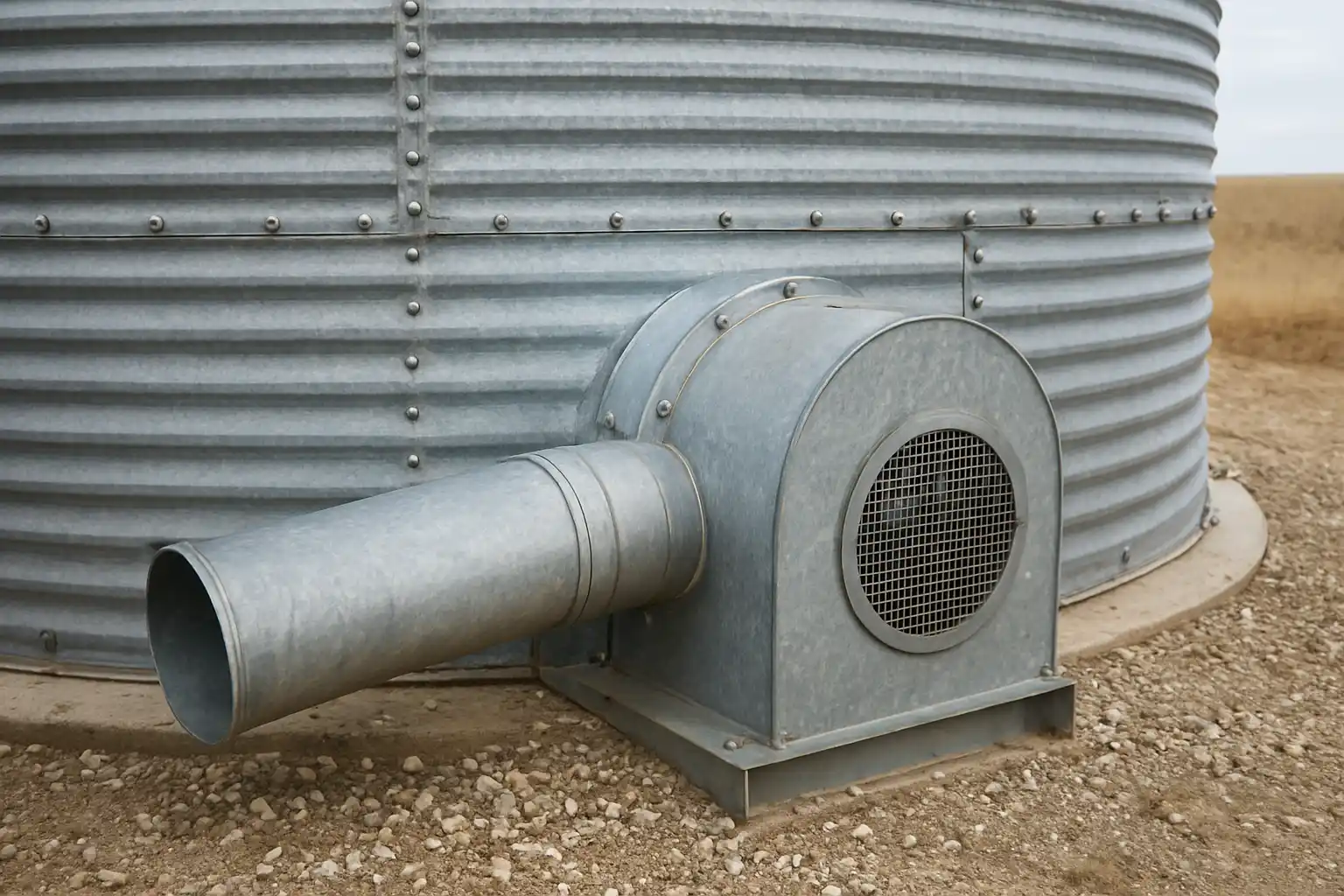
Grain can spoil when moisture and heat are not managed. Aeration fans move air through the stored crop to help manage temperature. Some systems support drying under suitable conditions, but not every fan can dry wet grain.
Review fan capacity, duct layout, power availability and monitoring equipment. Ask how grain temperature and moisture have been checked in the past. Old systems may need repairs or updates.
Stored grain creates serious hazards. Grain entrapment, confined spaces and moving equipment can be deadly. Never enter a bin or operate equipment without the correct safety process and trained help.
Farm shops and machinery buildings
A good farm shop can make repairs and service work easier. Key features include door height, building width, floor condition, heating, ventilation and electrical service. A large workshop may still be a poor fit if modern machinery cannot enter safely.
Check the roof and walls for leaks and damage. Look at drainage around the building, safe wiring and room to move equipment. Machinery sheds should provide useful protection without creating access problems.
Older structures may require major repairs. Ask qualified contractors to assess structural, electrical or mechanical concerns before relying on them.
Road and field access
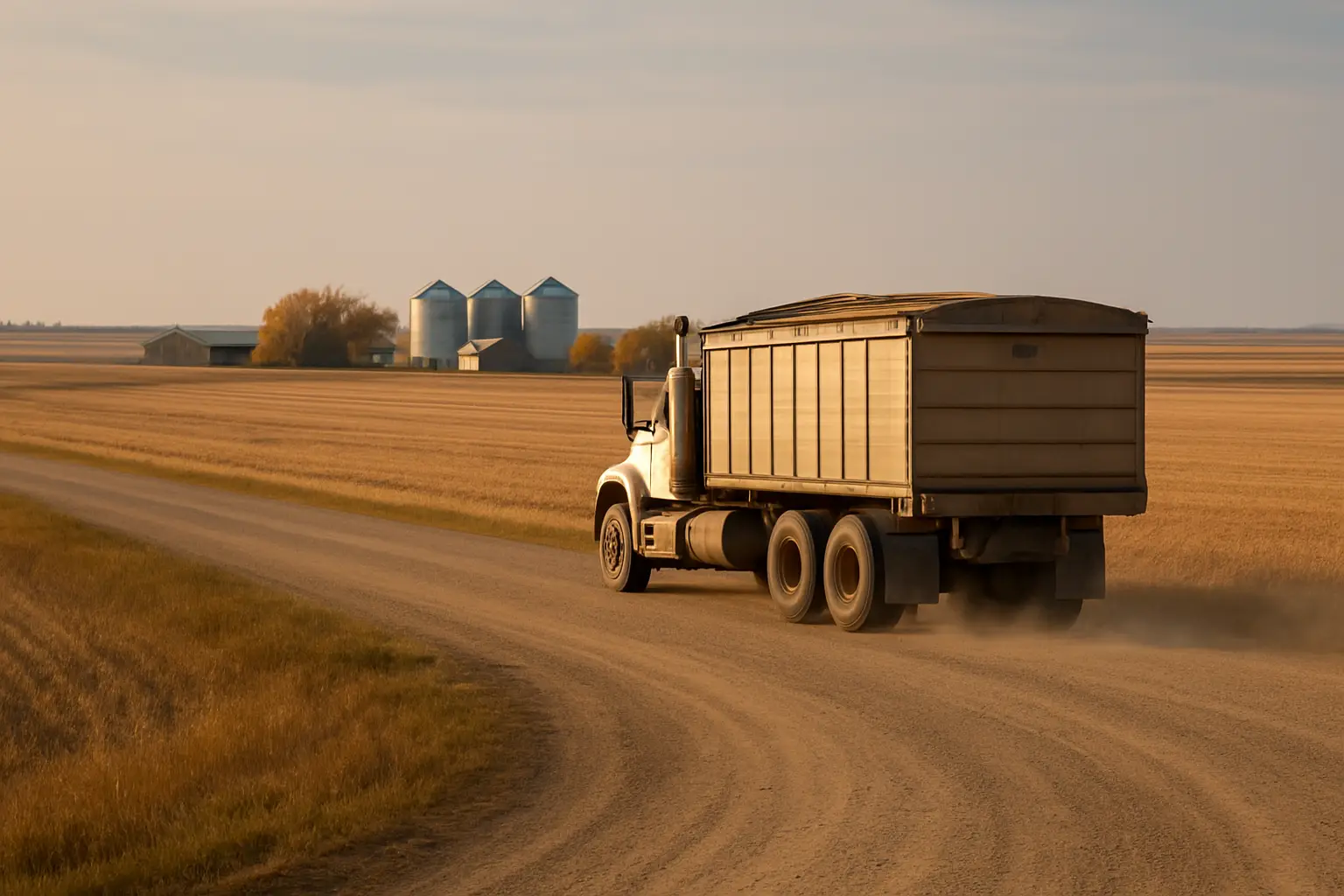
Equipment has grown larger over time. Narrow approaches, weak culverts and tight turning points can make farm work difficult. Consider the route from each field to the yard and onward to grain delivery points.
Useful questions include:
Is there a safe entrance for combines, seeders and grain trucks?
Is access from a public road or across neighbouring property?
Are bridges and culverts suitable for the planned load?
Do seasonal road restrictions affect transport?
Can trucks turn, load and leave without unsafe backing?
Legal access is different from a visible trail. Check registered rights and any relevant road agreements. Our guide to farmland listing details explains key property records worth reviewing.
Distance to delivery and repair services
Travel time affects fuel, labour and equipment wear. Compare actual heavy-truck routes, not just the shortest distance on a map. A road may be close but unsuitable for certain loads during part of the year.
Access to repair services and parts can also matter during harvest. An operator with several nearby fields may value a different location than someone who farms scattered parcels. The best location is the one that supports the real day-to-day plan.
Farmyard drainage and utilities
A farmyard should move water away from storage and buildings. Standing water can harm foundations, slow trucks and make the yard muddy during spring. Look for grading issues, blocked culverts and repeated wet spots.
Check electrical service, water and heating where those features are important. An older farmyard may not have enough power for new motors or shop tools. A professional can confirm whether upgrades are possible and what they may cost.
Inspect the whole system, not just one building
A farm might have several sound bins but no safe truck loading area. It might have a large shop but poor field access. These gaps can add costs even when the land itself is productive.
Record repairs that may be needed now and work that could be required in future years. It is easier to plan for a known cost than a surprise breakdown.
Different operations need different buildings
A larger grain operation may value bin capacity and truck access. A smaller mixed farm may need more fencing, water points and livestock facilities. A property with many buildings is not automatically a better fit.
Match each improvement to the crop plan, machinery and labour available. When possible, review the site during a busy work season to see how the layout performs.
Explore farmland around Melfort, compare nearby conditions in the Humboldt agricultural area, or see Saskatchewan farmland listings. You can also read about our farm real estate services.
Frequently asked questions
Do grain bins add value to a farm?
They may, if they are in good condition and useful for the operation. Unsafe or damaged bins can require costly repairs.
Does a large shop always suit modern equipment?
No. Door size, floor strength, power and interior layout matter as much as overall square footage.
Why check the legal status of a field approach?
A path that looks open may cross another property. Legal access should be confirmed, not assumed.
Should storage buildings be inspected by a specialist?
Yes when significant structural, electrical or mechanical concerns appear. Specialist advice can help define safety and repair needs.
Final thoughts
Melfort farmland infrastructure can shape the cost and pace of farm work. Review grain storage, shops, roads and yard services as one system. To discuss agricultural properties in the area, contact Darren and Tyler Sander.
