
Selling farmland in Saskatchewan can take anywhere from a few weeks to several months, depending on the property, asking price, location, buyer demand, and sale conditions. Well-priced farmland in a strong farming area may attract buyers quickly, while unique or higher-priced properties may need more time.
The selling timeline also includes marketing, negotiations, buyer conditions, legal work, and closing. Sellers can often reduce delays by preparing documents early, setting a realistic price, and marketing the property to qualified buyers. Understanding each stage of the process can help you plan your Saskatchewan farmland sale with fewer surprises.
How Long Does Farmland Take to Sell?
There is no fixed number of days for selling farmland in Saskatchewan. Some properties may receive interest soon after listing, while others can remain on the market for several months.
The total selling time usually includes:
Preparing the farmland for sale
Setting the asking price
Marketing the property
Answering buyer questions
Receiving and reviewing offers
Negotiating the purchase agreement
Completing buyer conditions
Legal closing and possession
A property can receive an accepted offer quickly but still take several weeks to close. For this reason, sellers should separate time on the market from the total transaction time.
If you are preparing to sell, our farmland selling services can help you understand the steps involved and prepare for the process.
What Affects Farmland Selling Time?
Several factors can make farmland sell faster or slower. The largest factors are usually price, location, land quality, buyer demand, and how well the property is marketed.
Asking Price
Price has a major effect on how long farmland stays on the market.
A property priced close to its market value may receive more attention from qualified buyers. A farm priced well above what buyers believe it is worth may take longer to sell.
Buyers often compare:
Price per acre
Price per cultivated acre
Recent nearby sales
Soil quality
Rental income
Property improvements
Local farmland demand
Setting a realistic price from the beginning can help avoid a long listing period.
Location
Farmland in an active farming area may sell faster because more local buyers may already be looking for land.
Location can affect demand based on:
Nearby farm operations
Road access
Distance to grain elevators
Distance to towns
Local soil conditions
Transportation routes
Nearby agricultural services
A neighbouring farmer may also have a strong reason to purchase nearby land because it fits their current operation.
You can see how farmland is marketed across the province through our Saskatchewan farms for sale page.
Soil Quality and Productive Acres
Good agricultural land can attract buyers faster when the price reflects its value.
Buyers may study:
Soil class
Crop history
Cultivated acres
Drainage
Field condition
Yield potential
Amount of non-productive land
A property with a high percentage of productive acres may appeal to more active farmers.
However, strong land can still take time to sell if it is priced too high or located far from interested buyers.
Property Size
Property size can affect the number of possible buyers. A smaller parcel may be affordable to a larger group of farmers. A very large farm may require a buyer with greater financing capacity.
Large farmland packages may also involve:
Several titles
Multiple parcels
Buildings
Equipment
Leases
More detailed financing
These factors can make the transaction more complex.
Buyer Demand
Buyer demand is one of the most important parts of the selling timeline. If several buyers are looking for farmland in the same area, a property may attract interest quickly. If only a small number of buyers are looking in that region, the sale may take longer.
Buyer demand can also change based on:
Farm income
Interest rates
Commodity prices
Local expansion plans
Availability of nearby land
Sellers should focus on reaching qualified buyers instead of simply trying to reach the largest possible audience.
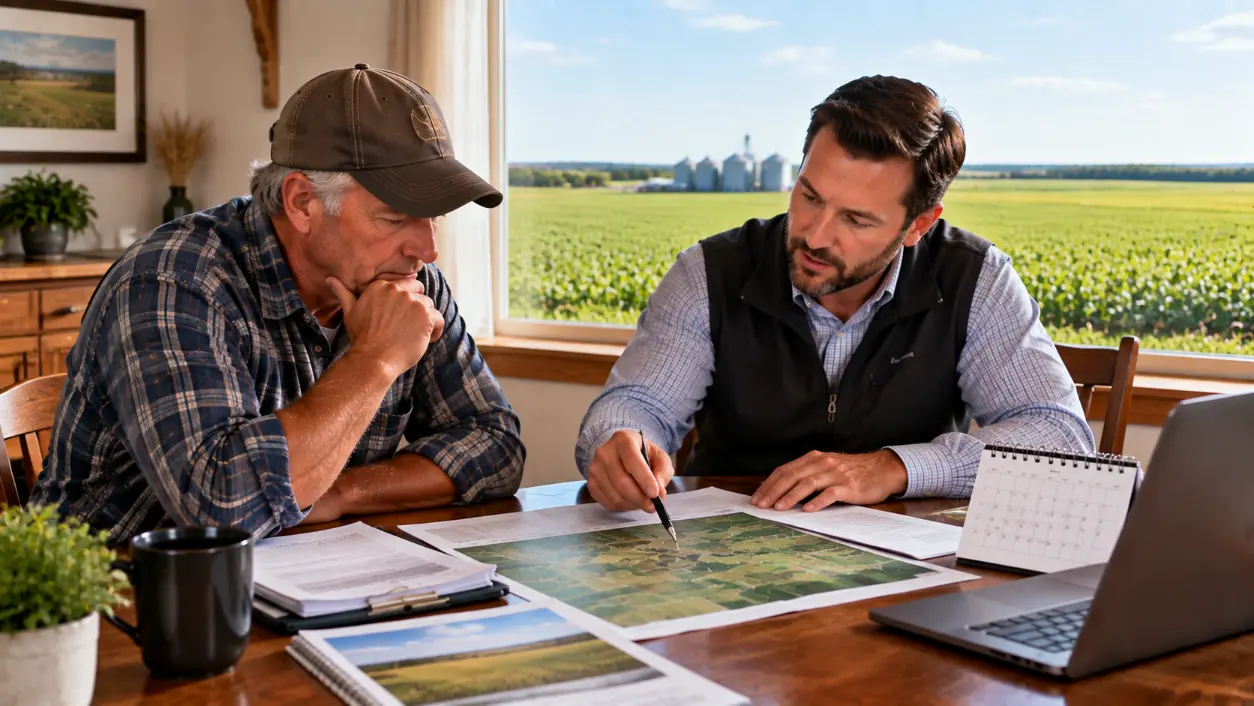
Can Farmland Sell Quickly?
Yes, farmland can sell quickly when the property is priced correctly, located in a strong market, and presented clearly to buyers. A quick sale is more likely when buyers can easily understand the property and see its value.
What Helps Farmland Sell Faster?
Several steps can improve the selling process:
Set a realistic asking price
Prepare land and title information early
Confirm cultivated acres
Gather lease documents
Provide clear soil information
Use current photos
Include aerial property images
Make access details clear
Respond to buyer questions quickly
Market to local and regional buyers
Good preparation reduces uncertainty. Buyers are more comfortable making decisions when the important property details are easy to review.
Can Pricing Too Low Make Farmland Sell Faster?
A low price may attract attention, but selling quickly should not be the only goal. The goal should be to balance speed with a fair market result. Pricing too low may lead to a faster offer but could leave money on the table.
A strong pricing strategy considers both market value and buyer demand. Sellers should understand what similar farmland has sold for before setting the asking price.
Is Spring the Best Time to Sell Farmland?
Spring can be a good time to market farmland, but it is not always the best season for every property.
The best time to sell depends on your goals, the local market, the farming calendar, and buyer demand.
Advantages of Selling Farmland in Spring
Spring can offer several benefits:
Buyers may be planning expansion
Fields become easier to inspect
Land conditions are more visible
Farmers may be reviewing plans for the coming season
Longer daylight can make property visits easier
However, spring can also be a busy season for active farmers. Seeding and field work may reduce the time some buyers have available.
Can Fall Be a Good Time to Sell?
Yes. Fall can also be an effective time to sell farmland. After harvest, farmers may have a clearer picture of their financial position and future land needs. Fields may also be easier to evaluate after crops have been removed.
Fall buyers may be thinking about:
Expanding for the next growing season
Buying neighbouring land
Reinvesting farm income
Planning next year's operations
There is no single season that guarantees the best result. For more information about timing, read our guide on the best time to buy or sell a farm.
What Is the Best Month to List Farmland?
There is no single best month for every Saskatchewan farmland sale.
The right month depends on:
Property location
Current buyer demand
Crop cycle
Lease terms
Seller timeline
Local market conditions
A seller with vacant land may have more flexibility than someone with a tenant farming the property.
If farmland is leased, the terms of the lease may also affect when a buyer can take possession. Sellers should review those agreements before setting a listing and closing timeline.
How Long Does a Farmland Transaction Take?
Once an offer is accepted, a farmland transaction can still take several weeks or longer to complete. The exact timeline depends on the purchase agreement and any conditions attached to the sale.
Common Steps After an Offer Is Accepted
The transaction may include:
Buyer financing
Title review
Legal document preparation
Review of leases
Review of property conditions
Deposit payment
Condition removal
Final closing
Transfer of ownership
Possession
A cash buyer with few conditions may complete the process faster. A buyer who needs financing or additional review may require more time.

What Can Delay a Farmland Closing?
Several issues can extend the closing timeline. Common examples include:
Financing delays
Missing documents
Title questions
Lease complications
Multiple land titles
Survey issues
Unclear possession terms
Delays in legal paperwork
Preparing information before listing can help prevent some of these problems.
How Can Sellers Reduce the Time It Takes to Sell Farmland?
Sellers cannot control every part of the market, but they can take steps to make the property easier to evaluate and purchase.
Prepare Documents Before Listing
Do not wait for a buyer to request basic information. Prepare:
Land titles
Tax information
Lease agreements
Crop history
Acreage information
Building details
Survey information
Improvement records
Having the information ready can speed up buyer decisions.
Set a Market-Based Price
An unrealistic price can increase the number of days a property spends on the market. Compare your farm with similar properties and consider differences in:
Soil
Productive acres
Access
Location
Improvements
Rental income
A market-based price can attract qualified buyers sooner.
Market the Property Clearly
A good farmland listing should answer common buyer questions without making them search for basic information.
Include details about:
Total acres
Cultivated acres
Soil
Location
Roads
Buildings
Water
Leases
Current land use
Clear property information can reduce unnecessary back-and-forth with buyers.
Reach Buyers Beyond the Immediate Area
The strongest buyer may not be the nearest farmer. Regional marketing can help reach buyers looking in different parts of Saskatchewan. For example, buyers may search for Regina farms for sale, farmland near Saskatoon, or properties in other farming regions.
A wider qualified buyer pool can improve both the speed and competitiveness of the sale.
Should I Accept the First Farmland Offer?
Not always. The first offer may be a good offer, but sellers should review the complete terms before deciding.
Consider:
Purchase price
Deposit
Financing conditions
Closing date
Possession date
Included assets
Buyer conditions
A higher offer with many conditions may take longer and carry more uncertainty than a slightly lower offer with stronger terms.
The best offer is often the one that provides the right balance of price, conditions, timing, and certainty.
Does Selling Farmland Privately Take Longer?
It can, but not in every case. A private farmland sale may move quickly if the seller already knows the buyer. For example, a neighbouring farmer may already be interested in purchasing the property.
However, a private sale may take longer when the seller must:
Find buyers
Determine the asking price
Prepare marketing
Answer inquiries
Arrange viewings
Negotiate offers
Professional marketing can help expose farmland to more potential buyers. Our buying and selling farmland services provide more information about the process for Saskatchewan buyers and sellers.
When Should I Start Preparing to Sell Farmland?
It is usually better to begin preparing before you need the sale completed. Early preparation gives you time to:
Understand the property value
Review legal documents
Check lease terms
Organize tax information
Prepare marketing materials
Choose your preferred timeline
Starting early also gives you more flexibility if market conditions change. Sellers who wait until the last minute may feel pressured to accept terms or timelines that do not fit their goals.
Frequently Asked Questions
How Long Does Farmland Take to Sell?
Farmland can take anywhere from a few weeks to several months to sell. The timeline depends on price, location, buyer demand, soil quality, property size, and marketing.
What Affects Farmland Selling Time?
The largest factors are asking price, land quality, location, productive acres, property size, local buyer demand, marketing exposure, and sale conditions.
Can Farmland Sell Quickly?
Yes. Farmland can sell quickly when it is priced correctly, located in an active farming area, marketed clearly, and presented to qualified buyers.
Is Spring the Best Time to Sell Farmland?
Spring can be a good time to sell, but there is no best season for every farm. Fall and other times of year can also work well depending on buyer demand, crop cycles, leases, and seller goals.
How Long Does a Farmland Transaction Take?
After an offer is accepted, the transaction may still take several weeks or longer. Financing, legal work, title review, lease terms, and the agreed closing date can all affect the timeline.
Can a Realtor Help Farmland Sell Faster?
A farmland realtor can help with pricing, marketing, buyer exposure, communication, and negotiations. These steps may reduce avoidable delays, although no specific sale time can be guaranteed.
Does a High Asking Price Make Farmland Take Longer to Sell?
It can. If buyers believe a farm is priced well above comparable properties, they may not make an offer. A market-based price can help attract serious buyers sooner.
Final Thoughts
There is no fixed timeline for selling farmland in Saskatchewan. Some properties may attract buyers within weeks, while others may require several months. Price, location, soil quality, productive acres, property size, buyer demand, and marketing all affect how quickly a farm can sell.
The closing process also takes time after an offer is accepted. Financing, legal work, title review, leases, conditions, and possession dates can add several weeks or more to the transaction.
Sellers can reduce avoidable delays by preparing documents early, setting a realistic price, providing clear property information, and reaching qualified buyers.
For more information about Saskatchewan agricultural real estate and available services, visit Darren Sander Realty. If you are considering selling your farm, you can also contact Darren Sander Realty to discuss your property and preferred selling timeline.
